-
Shop
- Advanced Technologies
- Astrology, Tarot, Crystals & More
- Bathroom
- Best-Sellers
- Car Accessories
- Dating & Social Confidence
- Dating & Social Skills
- Digital Resources
- Beauty
- Budgeting & Saving
- Car Buying & Ownership
- Electronics & Technology
- Emotional Intelligence
- Entrepreneurship & Business Growth
- Financial Independence
- Financial Mindset & Psychology
- Goal Setting
- Home Styling & Organization
- Leadership
- Mindfulness
- Mindset
- Motivation
- Online Business
- Parenting & Child Development
- Personal Style & Fashion
- Pet Lifestyle & Wellness
- Positive Thinking
- Productivity
- Self Confidence
- Sleep Improvement
- Smart Life with AI
- Stress Management & Relaxation
- Wellness
- Yoga & Mind-Body Practices
- Education & Learning
- Family & Parenting
- Fashion
- Fashion & Style
- Fashion Accessories
- Financial Education
- Fitness
- Furniture
- Gadgets
- Health & Beauty
- Health & Wellness
- Home & Garden
- Home & Kitchen
- Home Decor
- Home Electronics
- Home Supplies
- Kids & Babies
- Kitchen
- Lighting
- Online Content Creation & Platform Growth
- Parenting
- Patio, Lawn & Garden
- Personal Growth
- Pet Care
- Pet Supplies
- Pets
- Shoes
- Sport & Outdoors
- Super Deals
- Thanksgiving Digital Collection
- AI & Tech-Enhanced Thanksgiving
- Budgeting & Smart Shopping
- Eco-Friendly & Sustainable Thanksgiving
- Family & Kids
- Gift Ideas Guides
- Gratitude & Mindfulness
- History & Meaning
- Hosting & Planning
- Leftovers & Storage
- Pets & Thanksgiving
- Social Media Captions & Ideas
- Thanksgiving DIY Ideas
- Thanksgiving Recipes
- Thanksgiving Products
- Travel
- Wealth
- Popular
- Best deals



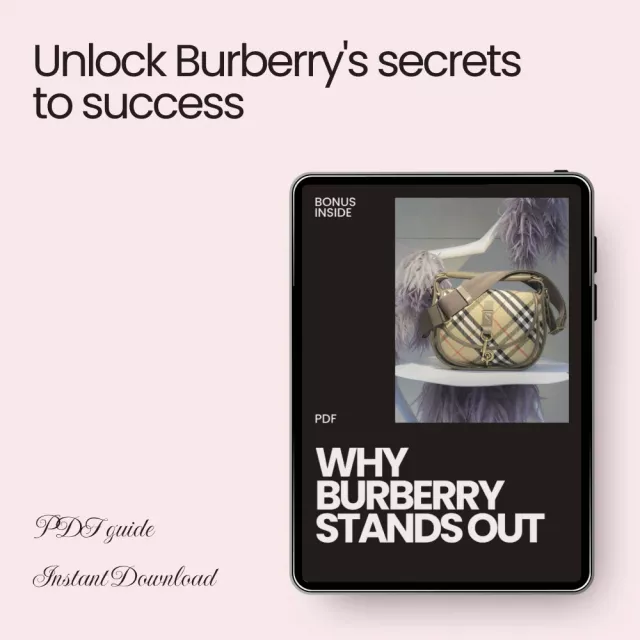
Product Description
Unlock the Secrets Behind Burberry’s Trusted Legacy
Step into the world of Burberry and discover why people trust Burberry like no other brand in the fashion industry. With “Why Burberry Stands Out,” this comprehensive guide takes you through the timeless elements that have made Burberry a symbol of luxury, quality, and confidence. Whether you’re a brand enthusiast, a budding entrepreneur, or simply someone interested in understanding the power of iconic brands, this digital download will leave you with valuable insights on how Burberry maintains its esteemed reputation in a competitive market.
Key Features of the Guide
- In-Depth Legacy Exploration: Learn about Burberry’s rich history, its origins, and the craftsmanship that defines its credibility.
- Consistency in Quality and Image: Delve into how Burberry maintains its high standards with material choices, timeless design, and brand messaging that resonates.
- Influence of Social Proof: Understand the impact of celebrity endorsements, customer loyalty, and how the brand stays relevant in popular culture.
- AI Insights for Modern Brands: Discover how AI can enhance brand strategies, analyze customer sentiment, and stay ahead of trends with free tools and tips.
Practical Benefits
- Gain Insight: Learn the core values that set Burberry apart and how they maintain trust over time.
- Improve Your Brand: Implement the strategies used by Burberry to ensure your own brand speaks with authority and consistency.
- AI Tools for Success: Use AI-powered insights to help shape your brand’s image, just like Burberry.
- Real-World Examples: See how Burberry’s success translates into real, actionable strategies that any brand can adopt.
Who Is This Guide For?
This guide is perfect for entrepreneurs, marketers, brand managers, and anyone looking to understand why people trust Burberry. Whether you’re building a brand or interested in learning from one of the world’s most iconic labels, this resource will help you apply valuable lessons to your own business.
Why Choose This Guide?
Unlike other digital resources, “Why Burberry Stands Out” doesn’t just tell the story of the brand—it offers actionable insights, case studies, and expert advice on how Burberry’s success can be leveraged for your own goals. You won’t find generic advice here—this guide is tailored to give you practical steps that can make a real difference in your business.
Get Your Copy Today
Ready to uncover the secrets behind one of the most trusted brands in the world? Download “Why Burberry Stands Out” today and start applying these proven strategies to your own business. Don’t miss out on this opportunity to take your brand to the next level!
Shipping & Delivery
SHIPPING
We are proud to offer international shipping services that currently operate in over 200 countries and islands world wide. Nothing means more to us than bringing our customers great value and service. We will continue to grow to meet the needs of all our customers, delivering a service beyond all expectation anywhere in the world.
Do you ship worldwide?
Yes. We provide free shipping to over 200 countries around the world. However, there are some locations we are unable to ship to. If you happen to be located in one of those countries we will contact you.
What about customs?
We are not responsible for any custom fees once the items have been shipped. By purchasing our products, you consent that one or more packages may be shipped to you and may get custom fees when they arrive to your country.
How long does shipping take?
Shipping time varies by location. These are our estimates:| Location | *Estimated Shipping Time |
|---|---|
| United States | 5-20 Business days |
| Canada, Europe | 5-20 Business days |
| Australia, New Zealand | 5-20 Business days |
| Central & South America | 5-25 Business days |
| Asia | 5-20 Business days |
| Africa | 5-25 Business days |
Do you provide tracking information?
Yes, you will receive an email once your order ships that contains your tracking information. If you haven’t received tracking info within 5 days, please contact us.
My tracking says “no information available at the moment”.
For some shipping companies, it takes 2-5 business days for the tracking information to update on the system. If your order was placed more than 5 business days ago and there is still no information on your tracking number, please contact us.
Will my items be sent in one package?
For logistical reasons, items in the same purchase will sometimes be sent in separate packages, even if you've specified combined shipping.
If you have any other questions, please contact us and we will do our best to help you out.
RETURNS
Order cancellation
All orders can be cancelled until they are shipped. If your order has been paid and you need to make a change or cancel an order, you must contact us within 12 hours. Once the packaging and shipping process has started, it can no longer be cancelled.
Refunds
Your satisfaction is our #1 priority. Therefore, you can request a refund or reshipment for ordered products if:
- If you did not receive the product within the guaranteed time (45 days not including 1-3 day processing) you can request a refund or a reshipment.
- If you received the wrong item you can request a refund or a reshipment.
- If you do not want the product you’ve received you may request a refund but you must return the item at your expense and the item must be unused.
We do not issue the refund if:
- Your order did not arrive due to factors within your control (i.e. providing the wrong shipping address)
- Your order did not arrive due to exceptional circumstances outside the control of epicbuysdepot.store (i.e. not cleared by customs, delayed by a natural disaster).
- Other exceptional circumstances outside the control of epicbuysdepot.store.
*You can submit refund requests within 15 days after the guaranteed period for delivery (45 days) has expired. You can do it by sending a message on Contact Us page
If you are approved for a refund, then your refund will be processed, and a credit will automatically be applied to your credit card or original method of payment, within 14 days.
Exchanges
If for any reason you would like to exchange your product, perhaps for a different size in clothing, you must contact us first and we will guide you through the steps.
Please do not send your purchase back to us unless we authorise you to do so.
Refunds & Returns
Order cancellation
All orders can be cancelled until they are shipped. If your order has been paid and you need to make a change or cancel an order, you must contact us within 12 hours. Once the packaging and shipping process has started, it can no longer be cancelled.
Refunds
Your satisfaction is our #1 priority. Therefore, you can request a refund or reshipment for ordered products if:
- If you did not receive the product within the guaranteed time( 45 days not including 2-5 day processing) you can request a refund or a reshipment.
- If you received the wrong item you can request a refund or a reshipment.
- If you do not want the product you’ve received you may request a refund but you must return the item at your expense and the item must be unused.
We do not issue the refund if:
- Your order did not arrive due to factors within your control (i.e. providing the wrong shipping address)
- Your order did not arrive due to exceptional circumstances outside the control of epicbuysdepot.store (i.e. not cleared by customs, delayed by a natural disaster).
- Other exceptional circumstances outside the control of https://epicbuysdepot.store
*You can submit refund requests within 15 days after the guaranteed period for delivery (45 days) has expired. You can do it by sending a message on Contact Us page
If you are approved for a refund, then your refund will be processed, and a credit will automatically be applied to your credit card or original method of payment, within 14 days.
Exchanges
If for any reason you would like to exchange your product, perhaps for a different size in clothing. You must contact us first and we will guide you through the steps.
Please do not send your purchase back to us unless we authorise you to do so.
Customer Reviews
See why hundreds love this product and trust us
Based on 36 reviews
Write a Review
We Think You’ll Love
Top picks just for you














The craftsmanship-as-credibility framing completely changed how I pitch my own brand's quality story.
Clean, tight, and genuinely useful — read it on a lunch break and took notes on every section 🔥
I've been trying to articulate why some brands feel trustworthy and others don't, even when the products are comparable. This guide nailed it. The idea that origin stories signal expertise gave me a framework I immediately applied to my own jewelry line's about page. The trust-mistakes table was equally valuable — I recognized my brand in the overpromising column and spent that evening rewriting our product descriptions to be more grounded. My return rate dropped the following month.
The social proof section puts into words what most brands feel but can't execute.
The generational hand-me-down point about classic pieces was subtle but powerful — that's the ultimate trust signal and I'd never thought of it that way.
Solid trust-building framework using Burberry as the case study. The AI chapter felt like an afterthought compared to the branding content though.
Precision stitching, durable fabrics, handmade finishes — those three details as trust signals is now my quality checklist.
⭐🧥🔥❤️
Short and sharp — says more in nine pages than most branding books do in three hundred.
I run a leather goods workshop and have always struggled to explain why our products cost more than mass-produced alternatives. The consistency chapter gave me the exact language I needed. The point about fabrics and cuts reflecting elegance and utility helped me rewrite our entire product line descriptions. I also started sharing customer stories on our Instagram after reading the social proof section — one post about a customer's five-year-old bag went semi-viral in our niche. Before this guide I was selling features. Now I'm selling trust. The trench coat case study is the perfect example of how a single product can carry an entire brand's credibility for over a century.
The ripple effect of celebrity endorsements explained simply and without hype.
Good branding primer with clear examples. Would rate higher if it went deeper into how smaller brands without Burberry's heritage can manufacture similar trust from scratch.
The mistake table in Chapter 3 is worth the entire read alone 💡
Timeless design over trend-chasing — simple concept but this guide makes the business case clearly.
Shared it with my co-founder and we rewrote our brand story that same night.
The connection between gabardine's invention and brand positioning is the kind of insight that makes you rethink your own origin story. Most brands bury their founding details in an about page nobody reads — this guide shows why that's a wasted opportunity.
Decent overview of trust-building through a fashion lens. Felt more like a primer than a deep dive — anyone with marketing experience will want more substance on execution.
The trench coat case study proves that function-first design ages better than any trend.
👏🇬🇧✨👌
Read this expecting a brand fan piece and got a legitimate trust playbook instead.
I manage brand strategy for a mid-size fashion label and picked this up out of curiosity. The section on brand messaging resonating through repetition of core values hit close to home — we'd been inconsistent across channels without realizing it. Spent a week auditing our social, email, and website copy after reading this and found we were saying three different things about who we are. The fix was straightforward once we saw the problem. The common mistakes table also caught us on trend-chasing — we'd been pivoting our aesthetic every season trying to stay current, and it was diluting exactly the identity we were trying to build. Scaled back to our core silhouettes and our repeat customer rate improved within two months. Even the AI sentiment analysis suggestion proved useful — we started monitoring review language patterns and caught a quality complaint trend before it became a real issue.
Useful content on consistency and social proof. The trendspotting tools section needed more practical walkthrough — naming Google Trends without showing how to use it for fashion insights leaves a gap.
Craftsmanship as credibility — four words that reframed my entire pricing strategy 🧵
Concise without cutting corners on the ideas that matter.
The point about chasing every trend diluting identity is something I needed to hear before our next collection launch.
Not bad as an introduction to brand trust mechanics. The Burberry examples work well but the guide doesn't offer much for readers who already understand the basics of positioning and social proof.
The celebrity endorsement ripple effect explained in two paragraphs better than my marketing textbook managed in a whole chapter.
Customer stories as trust currency — been preaching this to my team and now I have a clean reference to back it up.
I bought my first Burberry scarf ten years ago and never questioned why I kept going back. This guide decoded the exact psychological mechanics behind that loyalty. The section on iconic symbols becoming shorthand for trust explained what I was feeling but couldn't name. It's not just the check pattern — it's what the check pattern represents after decades of consistent quality. Applied that thinking to my own candle brand and started treating our signature jar shape as a trust signal rather than just packaging.
Strong on the why, lighter on the how — but the why is what most guides skip.
Solid framework overall. The AI tools section felt bolted on — would rather have seen that space used for more brand trust case studies.
🔥👜⭐👏✨
The realistic messaging point in the mistakes table is underrated — most brands don't even realize they're overpromising until the returns pile up.
Every emerging designer should read the consistency chapter before launching.
Sent this to my whole marketing team — the trust-erosion mistakes were too familiar to ignore 👀
Clear, honest, and avoids the worship tone most brand guides fall into.